
  1. Data Science Blog/

What is CAPTCHA?

·253 words·2 mins· loading · ·
Cybersecurity Web Development Cybersecurity Web Development Computer Vision

What is CAPTCHA?

What is CAPTCHA?
#

CAPTCHA stands for “Completely Automated Public Turing test to tell Computers and Humans Apart.” It is a security mechanism used by websites to determine whether the user is a human or a computer program (bot). CAPTCHAs are typically implemented as tests or challenges presented to the user, which are easy for humans to solve but difficult for bots.

The purpose of CAPTCHA is to prevent automated bots from performing actions that are intended for human users, such as creating accounts, submitting forms, or accessing restricted content. By requiring users to complete a CAPTCHA, websites can verify their humanity and protect against spam, brute-force attacks, data scraping, and other malicious activities.

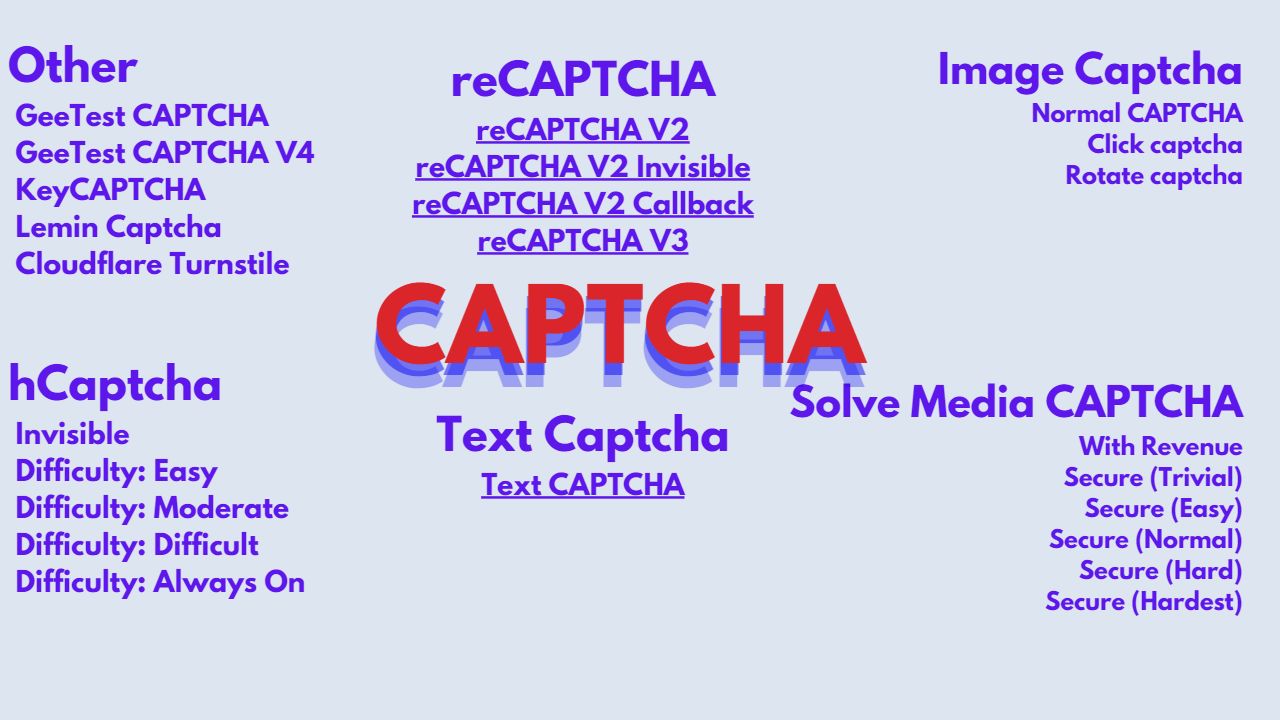
CAPTCHAs can take various forms, such as

  • Distorted images of alphanumeric characters,
  • Math problems,
  • Logical puzzles,
  • Audio challenges: What is said,
  • Audio challenges: What is not said,
  • Audio challenges: whose voice is that.
  • Audio challenges: Is it bird, child or animal voice.
  • Identify image spoken
  • Image Challenge: Identify image for which text is typed in disorted form
  • Image Challenge: Locate an object in an image
  • Simple checkboxes.

The idea is to create a task that is easy for humans to interpret and complete, but challenging for bots to understand and solve accurately.

In recent years, CAPTCHAs have become more sophisticated with the use of advanced algorithms and machine learning techniques. This has led to the development of more secure and user-friendly CAPTCHA mechanisms that are difficult for bots to bypass while maintaining a better user experience for human users.

Related

Quantum Measurement, Randomness, and Everyday Technology
·778 words·4 mins· loading
Interdisciplinary Topics Research & Academia Quantum Physics Quantum Mechanics Quantum Computing Interdisciplinary Topics
Quantum Measurement, Randomness, and Everyday Technology # This is Part 2 of Learning Quantum …
AI Agents as First-Class Citizens: Why Managing the Digital Workforce Is the Next HR Challenge
·2607 words·13 mins· loading
Artificial Intelligence Business & Career Technology Trends & Future AI Integration Future of Work AI Governance Organizational Design Generative AI
AI Agents as First-Class Citizens # Why Managing the Digital Workforce Is the Next HR Challenge …
When Consciousness Becomes Cosmos: Fields, Particles, Matter, and the Emergence of Size
·5741 words·27 mins· loading
Philosophy & Cognitive Science Interdisciplinary Topics Quantum Field Theory Consciousness Physics Advaita Vedanta Philosophy of Mind Emergence Metaphysics
When Consciousness Becomes Cosmos # From Consciousness to Cosmos: Fields, Particles, Matter, and …
Occam's Razor: Why the Simplest Explanation Often Wins
·994 words·5 mins· loading
Philosophy & Cognitive Science Interdisciplinary Topics Data Science Occam's Razor Critical Thinking Scientific Method Simplicity Decision Making Machine Learning Software Development
Occam’s Razor: Why the Simplest Explanation Often Wins # Prefer fewer assumptions until the …
From Claw Code to Clean Room: A Developer's Guide to Re-implementing Software Without Getting Sued
·2854 words·14 mins· loading
AI Ethics & Governance Software Development Technology Trends & Future Clean Room Design Intellectual Property AI Code Generation Software Copyright Trade Secrets Software Development
From Claw Code to Clean Room: A Developer’s Guide to Re-implementing Software Without Getting …