
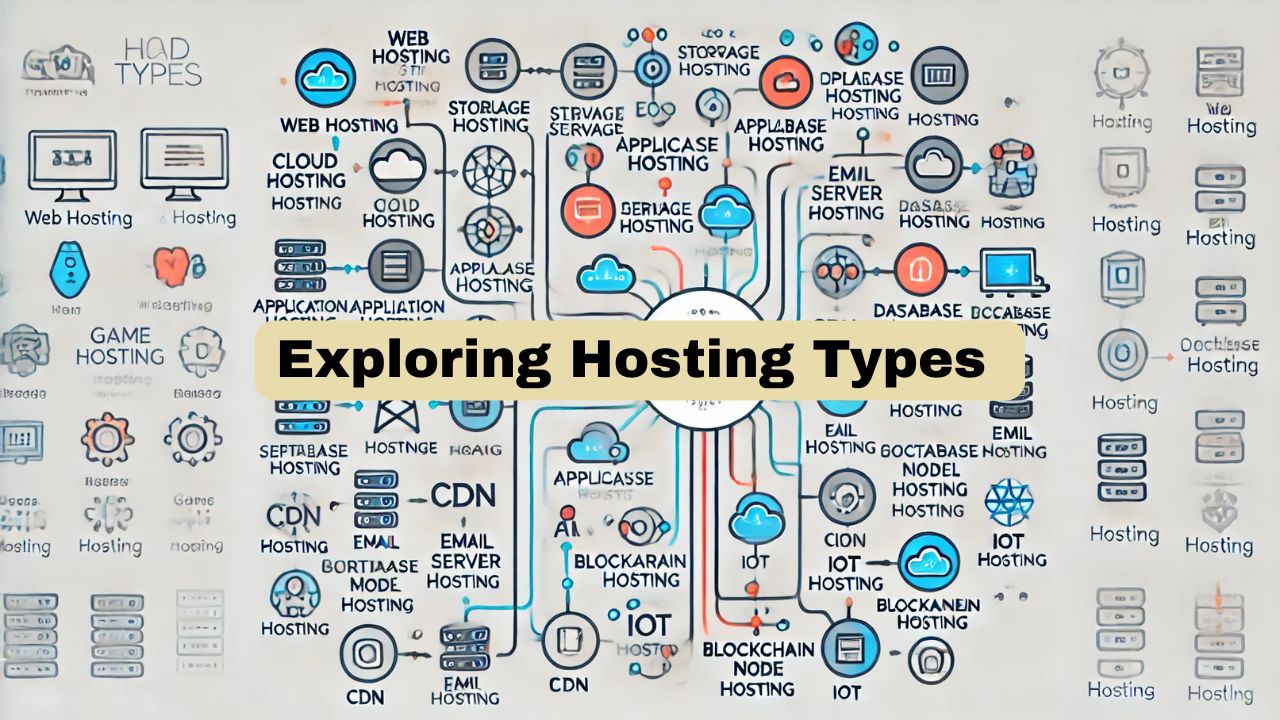
Exploring Hosting Types#
Hosting by Infrastructure Types#
There are several types of hosting available in the market, each suited to different needs, from small personal websites to large enterprise applications. Here’s a breakdown of the main types of hosting by Infrastructure, along with the major players in each category:
🌐 1. Shared Hosting#
Description: Multiple websites share the same server resources (CPU, memory, disk, etc.). Ideal for small websites or blogs with low traffic.
Pros: Low cost, easy setup
Cons: Limited resources, potential performance issues due to noisy neighbors
Major Players:
- Bluehost
- HostGator
- SiteGround
- Namecheap
- GoDaddy
🖥️ 2. VPS Hosting (Virtual Private Server)#
Description: A physical server is divided into multiple virtual servers. Offers more control and better performance than shared hosting.
Pros: More control, scalable
Cons: Slightly more expensive, requires technical knowledge
Major Players:
- DigitalOcean
- Linode
- Vultr
- Hostinger
- A2 Hosting
🧑💻 3. Dedicated Hosting#
Description: You get an entire server dedicated to your website/application. Great for high-traffic or resource-intensive applications.
Pros: Full control, high performance
Cons: Expensive, requires server management skills
Major Players:
- OVHcloud
- Liquid Web
- InMotion Hosting
- GoDaddy (dedicated plans)
- Bluehost (dedicated plans)
☁️ 4. Cloud Hosting#
Description: Websites/apps are hosted on a network of virtual servers across multiple data centers. Highly scalable and reliable.
Pros: Scalable, reliable, pay-as-you-go pricing
Cons: Can get expensive with high usage
Major Players:
- Amazon Web Services (AWS)
- Microsoft Azure
- Google Cloud Platform (GCP)
- Alibaba Cloud
- IBM Cloud
- Oracle Cloud
🚀 5. Managed Hosting#
Description: Hosting provider manages server maintenance, security, and updates. Often used for CMSs like WordPress.
Pros: Hassle-free, great support
Cons: Higher cost, less customization
Major Players:
- WP Engine (for WordPress)
- Kinsta (WordPress-focused)
- Flywheel
- Cloudways
- SiteGround (Managed WordPress plans)
⚙️ 6. Colocation Hosting#
Description: You rent space in a data center and provide your own server hardware. Data center provides power, cooling, bandwidth.
Pros: Full control over hardware
Cons: High upfront cost, requires technical expertise
Major Players:
- Equinix
- Cyxtera
- Digital Realty
- Rackspace (also offers cloud/managed services)
- NTT Data
🧪 7. Platform as a Service (PaaS)#
Description: Hosting that abstracts infrastructure, allowing developers to deploy code directly.
Pros: Developer-friendly, fast deployments
Cons: Less control over environment
Major Players:
- Heroku
- Render
- Railway
- Vercel (frontend-focused)
- Netlify (frontend/static sites)
- Google App Engine
- AWS Elastic Beanstalk
📦 8. Static Site Hosting#
Description: Optimized for static sites like blogs, documentation, or JAMstack apps.
Pros: Fast, secure, cheap or free
Cons: Not suitable for dynamic content (without serverless functions)
Major Players:
- Netlify
- Vercel
- GitHub Pages
- Cloudflare Pages
- Firebase Hosting
📡 9. Serverless Hosting (Function-as-a-Service)#
Description: Runs code in response to events without provisioning servers.
Pros: Scalability, cost-efficient for infrequent tasks
Cons: Cold starts, limited runtime for long processes
Major Players:
- AWS Lambda
- Google Cloud Functions
- Azure Functions
- Cloudflare Workers
- Vercel Serverless Functions
Hosting by Content Type#
1. Web Hosting (Umbrella Term)#
Purpose: Hosts websites (HTML, CSS, JS, and backend files) so they are accessible via the internet. Web hosting is mainly for serving websites — it’s a broad term that can include other categories like shared/VPS/managed hosting.
Types under this category:
- Shared Hosting
- VPS Hosting
- Dedicated Hosting
- Managed WordPress Hosting
- Static Site Hosting
Major Players:
- Bluehost, HostGator, SiteGround, GoDaddy, Namecheap, A2 Hosting
2. Cloud Hosting#
Purpose: Websites or applications are hosted on virtual servers that pull computing resources from a vast underlying network of physical servers (the “cloud”). It’s both a subcategory of web hosting and a distinct paradigm due to its dynamic nature.
Difference from Traditional Web Hosting:
- Cloud hosting is highly scalable and redundant
- It’s a form of web hosting, but more modern, powerful, and flexible
- Ideal for applications needing high uptime and scalability
Major Players:
- AWS (EC2, Lightsail)
- Google Cloud Platform (Compute Engine)
- Microsoft Azure
- DigitalOcean
- Linode
- Vultr
3. Storage Hosting (a.k.a. Object/File/Block Storage)#
Purpose: Meant only for storing and serving files or large volumes of data, not full applications. This is not web hosting — it’s used as infrastructure, usually by developers/devops teams.
Types of Storage Hosting:
- Object Storage: For unstructured data (e.g., images, videos, backups)
- File Storage (NAS): For shared files like in file servers
- Block Storage (SAN): For structured, high-performance storage, like databases
Major Players:
- Object Storage:
- AWS S3
- Google Cloud Storage
- Azure Blob Storage
- Wasabi, Backblaze B2
- File/Block Storage:
- AWS EFS / EBS
- Azure Files / Disks
- Google Filestore / Persistent Disk
4. Application Hosting / Platform Hosting#
Purpose: For hosting full applications (backend + frontend + databases), often via a platform layer.
Examples:
- Hosting a Node.js app, Python Flask/Django, or Java Spring app
- Often uses PaaS (Platform-as-a-Service) offerings
Major Platforms:
- Heroku
- Render
- Railway
- AWS Elastic Beanstalk
- Google App Engine
- Vercel / Netlify (frontend + serverless backend)
5. Database Hosting#
Purpose: Specifically for hosting databases (e.g., MySQL, PostgreSQL, MongoDB)
Major Providers:
- Amazon RDS / Aurora
- Google Cloud SQL / Firestore / BigQuery
- MongoDB Atlas
- PlanetScale (MySQL)
- Supabase (Postgres-based backend)
6. Edge Hosting / Edge Computing#
Purpose: Hosts services closer to the end user (at the “edge” of the network) to reduce latency.
Use Cases: Real-time apps, IoT, AR/VR, gaming, video streaming
Major Players:
- Cloudflare Workers / Pages
- Fastly Compute@Edge
- Akamai EdgeWorkers
- AWS Lambda@Edge
7. Serverless Hosting / Function Hosting#
Purpose: Run small code snippets or “functions” without managing infrastructure.
Use Cases: APIs, cron jobs, event-driven apps, backend logic for JAMstack sites
Major Players:
- AWS Lambda
- Google Cloud Functions
- Azure Functions
- Vercel/Netlify Serverless Functions
8. Email Hosting#
Purpose: Provides business or personal email services with custom domains.
Major Players:
- Google Workspace (Gmail for Business)
- Microsoft 365 (Outlook)
- Zoho Mail
- ProtonMail (Privacy-focused)
- Fastmail
9. Media Hosting (Video/Image Hosting)#
Purpose: Optimized hosting for large multimedia files with fast delivery and CDN support.
Use Cases: Video platforms, streaming services, podcasts
Major Players:
- Vimeo OTT / Livestream
- JWPlayer
- Cloudinary (image/video transformation + delivery)
- Bunny.net (video CDN)
- YouTube (for free video hosting, limited control)
10. Game Server Hosting#
Purpose: Hosts multiplayer game servers.
Major Players:
- Amazon GameLift (AWS)
- Nitrado
- HostHorde
- GameServers.com
11. CDN (Content Delivery Network)#
Purpose: Not exactly hosting, but used to distribute hosted content globally.
Major Players:
- Cloudflare
- Akamai
- Fastly
- Amazon CloudFront
12. AI/ML Model Hosting#
Purpose: Hosts and serves machine learning models for inference.
Major Players:
- AWS SageMaker
- Google Vertex AI
- Hugging Face Inference Endpoints
- Replicate
- RunPod / Modal / Banana.dev
13. Container Hosting / Orchestration#
Purpose: For hosting Docker containers or Kubernetes clusters.
Use Cases: Microservices, scalable apps, CI/CD environments
Major Players:
- AWS ECS / EKS
- Google GKE
- Azure AKS
- Docker Hub (for container images)
- Render / Railway / Fly.io (app-level abstraction)
14. Blockchain Node Hosting#
Purpose: Hosting full nodes or validators for blockchain networks.
Major Players:
- Infura (Ethereum)
- Alchemy
- Chainstack
- QuickNode
15. IoT Hosting#
Purpose: Hosting infrastructure for IoT devices and telemetry.
Major Players:
- AWS IoT Core
- Google Cloud IoT
- Azure IoT Hub
- Particle.io
Quick Summary for Developers/Builders#
| Type | Purpose | Typical Users | Examples |
|---|---|---|---|
| Web Hosting | Host websites | Bloggers, SMBs | Bluehost, HostGator |
| Cloud Hosting | Scalable, virtualized hosting | Startups, enterprises | AWS, GCP, Azure, DigitalOcean |
| Storage Hosting | File/object/block storage | DevOps, app devs, data backup | AWS S3, Azure Blob, Wasabi |
| App Hosting (PaaS) | Host full applications | Developers, startups | Heroku, Vercel, Render |
| Database Hosting | Host databases | Backend devs, data teams | RDS, MongoDB Atlas, Supabase |

Comments: